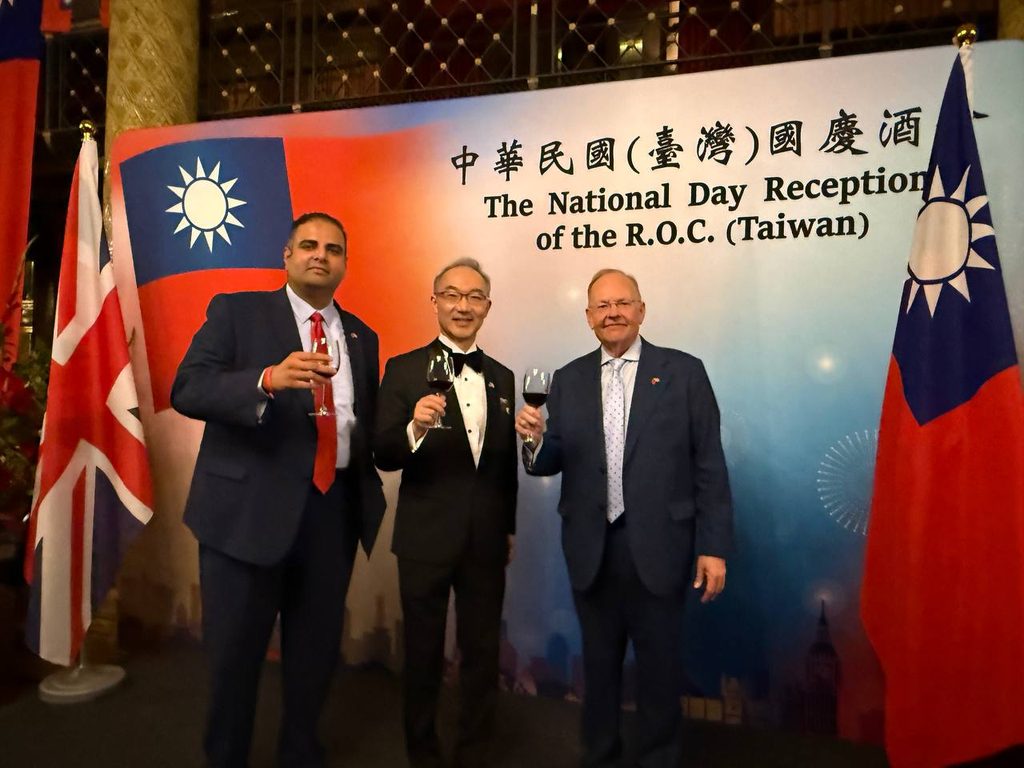
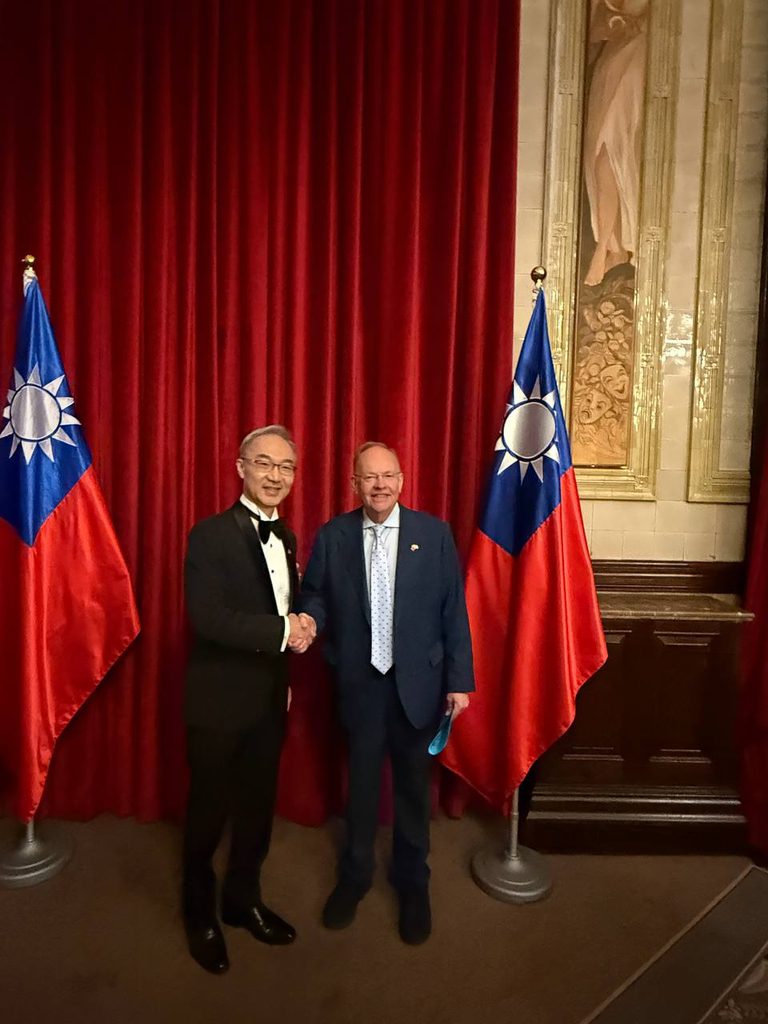
Pleased to speak at the 115th celebration of Taiwan’s National Day at the National Liberal Club last night. As ever, a great occasion! I spoke of the significance of being in a Club opened by William Ewart Gladstone and who sought to uphold strong moral values in foreign policy. Taiwan’s cause is the cause of all liberal democracies.
This was my speech:
Ambassador Yao,
Your Excellencies, distinguished guests, my Lords, Ladies, and Gentlemen.
It is a great pleasure for me to stand here as an Officer of the All Party Parliamentary Group on Taiwan, a very large group which brings together members from both Houses of the Westminster Parliament in support of Taiwan and its rightful place in the world, promoting the benefits of its international participation, and speaking in support of defending its democracy, its freedom, and its commitment to human rights and freedom of speech. We gather once again at the National Liberal Club to celebrate Taiwan’s National Day in these fine and historically important surroundings.
“Always inspired by the love of freedom”
I mentioned last year how it was opened in 1882 by the four-time British Prime Minister William Ewart Gladstone. It is an appropriate place for us to be as this institution stands as a monument to moral leadership and democratic values. Gladstone spoke powerfully of Britain’s duty to uphold international human rights; he criticised imperial abuses, and he insisted that foreign policy must be guided by high moral principles.
He championed a foreign policy aimed at preserving peace, avoiding needless conflict, acknowledging the equal rights of all nations, and remaining “always inspired by the love of freedom”.
Today, those enduring principles find their most urgent expression in our solidarity with Taiwan.
Taiwan is under threat whilst at the same time it serves as a beacon of hope for everyone striving to build peaceful, multi-party democracies.
In times of global crisis, Taiwan has proven itself to be a crucial global model—exemplified by its early, transparent response to the COVID-19 pandemic, which built public trust and effectively deployed modern technology.
It is essential that Taiwan be properly represented on the world stage, including in international bodies such as the World Health Organisation and the broader United Nations system.
Our Parliament has passed a motion stating that the UN Resolution 2758 from 1971 recognising the PRC did not mention Taiwan, did not provide for sovereignty over Taiwan, and did not restrict in any way Taiwan’s international participation.
Solidarity
The world’s liberal democracies must now have great regard to the changing shape of military and grey-zone pressures confronting Taiwan, because Taiwan is at the frontline fighting against threats to the principles of those democracies.
We are aghast that last month Chinese military aircraft entered Taiwan’s air defence identification zone 181 times, as it has done on average this year.
Chinese coast guard vessels entered restricted waters around Kinmen four times, circled Pratas Island for over 24 hours, and patrolled east of Taiwan.
Critical undersea communications infrastructure is under repeated strain, with Chinese research vessels operating near the Luzon Strait cables, and previous disruptions severed Matsu’s internet access for weeks.
Unlike in mainland China, people in Taiwan can make choices about what kind of country they want to live in.
But with local elections on 28 November, Taiwan faces intensified grey-zone threats, including cyber operations, disinformation campaigns, and AI deepfakes. In navigating these pressures, democratic nations must reject any framing that treats defence support as a transactional “negotiating chip”.
International deterrence must ensure regional stability and ensure that “Taiwan is not on the menu”. To maintain peace across the Taiwan Strait, Taiwan urgently needs the expedited delivery of stalled arms shipments—particularly air defence systems—to complement President Lai’s 210 billion Taiwanese dollar drone plan and to form a defensive “hornet’s nest”.
Allies
Allies must support shared collective defence, build on recent joint public statements from the UK, US, Australia, France, Germany, Japan, New Zealand, Poland, and South Korea opposing unilateral changes to the status quo.
We must also deepen European cooperation against hybrid threats whether from Russia in Europe or China in the straits of Taiwan. The UK has a strong economic and technological partnership with Taiwan with bilateral commerce reaching £8.9 billion pounds in 2025. Just a few days ago, at the 28th annual UK–Taiwan Trade Talks, co-chaired by Trade Minister Lord Sarwar and Deputy Minister Cynthia Kiang, our governments deepened collaboration across digital trade, clean energy, and resilient supply chains.
A milestone Science, Innovation and Technology Arrangement has just been signed linking UK academic research in semi-conductors, space, telecommunications, net zero, and AI standards with Taiwan’s world-leading hardware manufacturers.
Only by standing firmly together, can democratic nations contain dictator threats, protect open trade, and confront global challenges like climate change. So let us continue strengthening our strategic, diplomatic, and economic ties with Taiwan, remaining true to Gladstone’s vision of international justice and freedom.
谢谢你
Thank you.